Rabbit Control
Other Rabbit Damage Facts:
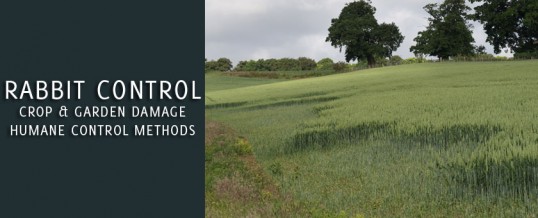
Cereals:-Wheat, Barley and oats can suffer up to 20% yields.
Grassland:-Newly sown grassland grazed by rabbits can fail to establish properly.
Scratching, burrowing and contamination and competition with livestock.
Grass fields can be seen with rabbits in that are like lawns. No grass for livestock.
A loss of 1% per rabbit per hectare.
Trees:-Rabbits and hares (as well as deer) can damage young tree plantations.
Nursery stock can be killed and older trees can suffer bark damage.
Rabbit grazing can prevent natural regeneration of woodlands.

Rabbit Damage To Ash Saplings.
Common rabbit problems are:
Loss of early combinable crops
Loss of young tree’s/plant/shrubs
Damage to amenity grass areas including playing fields, golf courses, landscaped spaces
Damage to private domestic gardens
Disruption and damage via continuous digging and burrowing.
Visual damage via scuts, scrapings etc.
Rabbits, in large numbers, have also been involved in the destabilising of buildings where they have excavated in and around the building foundations.
The rabbit is not only a major agricultural pest but also a major issue with regards to both domestic and amenity situations.
Due to their ability to reproduce at an alarming rate, early intervention where rabbit issues are present is always recommended.
In most situations the need for rabbit control is evidently clear. The main types of techniques used for rabbit control and clearance are presented below:
Trapping (live capture plus spring traps)
Shooting
Ferreting
Gassing
Long netting
Drop boxes (traps) used alongside rabbit proof fencing
Rabbit proof fence and fencing installation
It should be noted that under the Pests Act 1954 every occupier of land has a responsible duty to control rabbits on their land.
We provide not only one-off clearance solutions but also yearly contractual services to ensure numbers remain low.